Showing all 3 results
-
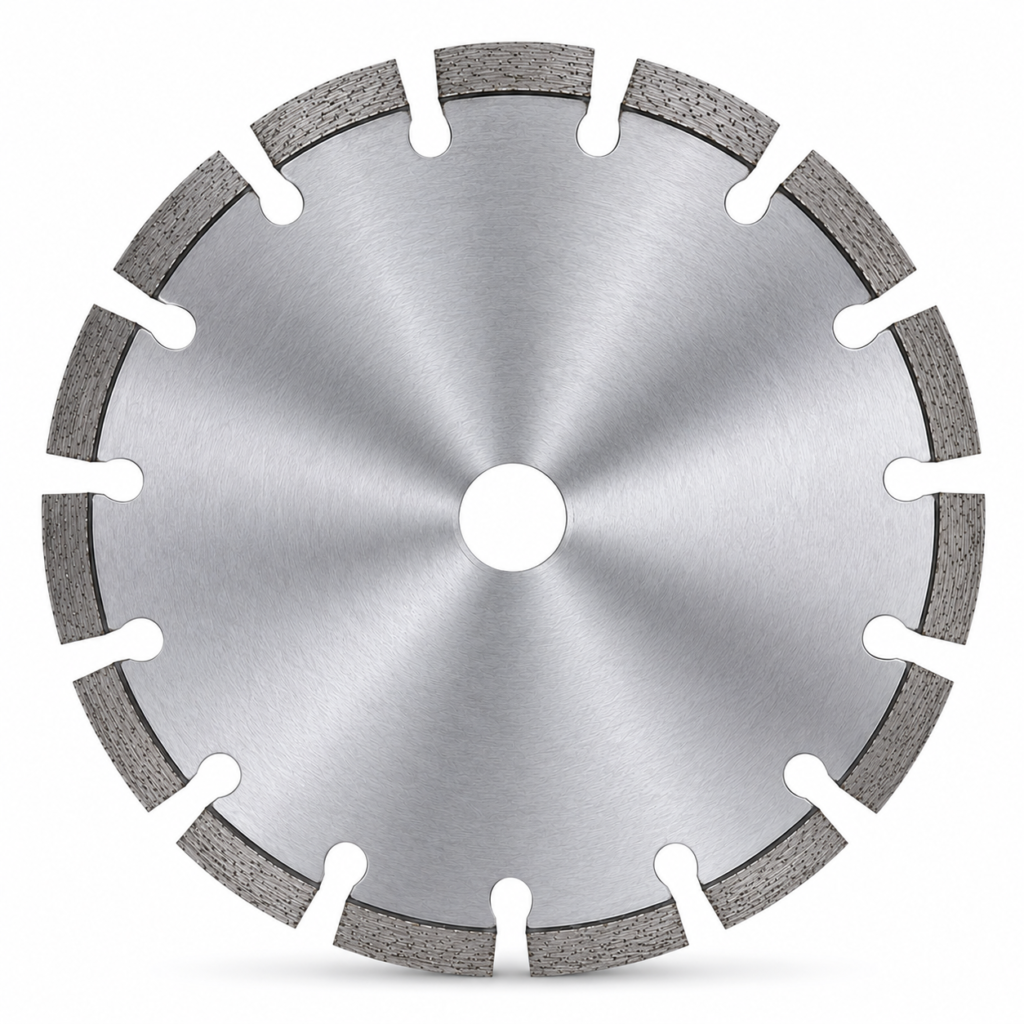
DOT Asphalt Pro Blade
Hard-bond asphalt diamond blade with undercut protection, 14–36″. Built for abrasive asphalt, roads & utility work.
Price range: $160.00 through $475.00 -

DOT Road Saw Blade (High-HP Flat Saw)
Hard-bond segmented road saw blade, 42″–54″, for full-depth pavement on high-horsepower flat saws. Wet cutting only.
Price range: $675.00 through $875.00 -
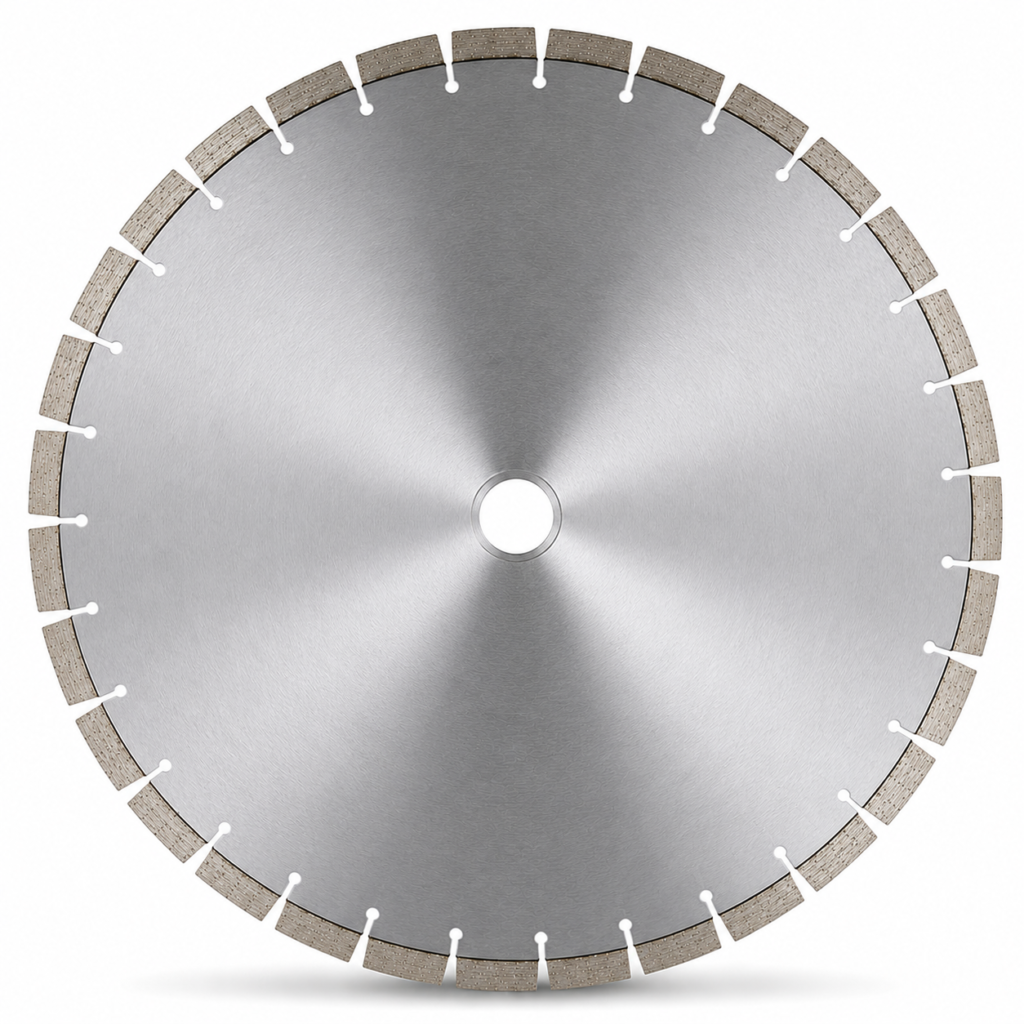
DOT Walk-Behind Pro Blade
High-speed walk-behind diamond blade for slab & roadway, 18–36″, 1″ arbor. Cut wet for maximum life.
Price range: $255.00 through $565.00
Asphalt Diamond Blades for Roadwork and Paving
Asphalt is sand and stone held together with bitumen, and it does not behave like concrete in any respect that matters to a diamond blade. It is soft, it is highly abrasive, and it moves under heat. A blade specified for cured concrete put into asphalt will be finished in days, and the operator will usually blame the blade rather than the specification. DOT Diamond Tools supplies hard-bond asphalt blades to paving crews, utility contractors and highway maintenance departments across the country.
Why asphalt destroys the wrong blade
The counterintuitive rule governs everything here. Soft, abrasive material takes a hard bond. Loose grit in the cut scours the metal matrix away far faster than the diamonds wear, so a soft bond releases perfectly good diamond long before it has done any work. A hard matrix resists that erosion and holds each crystal until it is genuinely spent. Put the same hard-bond blade into dense cured concrete and it will glaze instead, which is why one blade cannot sensibly serve both. The full explanation is in our guide to diamond blade bond.
Undercutting is what ends most asphalt blades
Inspect a retired asphalt blade and the damage is rarely on the segments. It is on the steel core directly beneath them. Slurry carrying suspended sand scours the shoulder of the core until it thins, and eventually a segment departs with a section of steel still attached. That is undercutting. Blades built for asphalt carry sacrificial wear protection below each cutting segment for exactly this reason, and it is the single specification that separates a genuine asphalt blade from a general-purpose one sold as such.
Sizing the blade to pavement depth
Depth is arithmetic, not preference. A diamond blade should not be buried much past a third of its own diameter, which sets a hard relationship between blade size and what you can achieve in one pass. A 14 inch blade reaches roughly 4-1/2 inches, an 18 inch blade about 6 inches, a 30 inch blade around 10 inches and a 36 inch blade close to 12 inches. Work back from the pavement thickness on the drawing and buy the blade that clears it in a single pass. Ordering the smaller blade to save money turns one pass into three, and inside a timed lane closure that arithmetic never works.
Wet or dry on the road
Asphalt cuts cooler and clears faster wet, and a walk-behind saw already carries a tank or a hose connection, so on machine work there is no reason not to. Handheld tie-in cuts, curb work and awkward corners are often unavoidably dry. When cutting dry, keep the blade moving and never dwell in one spot; heat softens the bitumen, the gullets pack solid with warm material and the blade stops clearing. Water also converts airborne silica into slurry, which matters on a live carriageway with traffic passing. See wet versus dry cutting and silica control under OSHA Table 1.
Green concrete behaves like asphalt
A fresh concrete pour has not developed its strength, so its sand and fines act as loose abrasive in exactly the way asphalt does. That is why a hard-bond asphalt blade is usually the right tool for green concrete too, and why our Asphalt Pro Blade carries both materials on its specification. Once the same slab has cured hard it wants the opposite bond entirely, and you should move to the concrete blade range.
What roadway crews actually cut
Utility trench boundaries across a live road, full-depth pavement repair, milling boundary cuts, municipal patching programs and joint work ahead of an overlay. What these share is abrasive material, long linear footage and a clock. Blade stock matters as much as blade choice; a change takes minutes, a return visit takes a shift and another closure. There is more on how this sector buys in our guide for highway contractors.
Frequently Asked Questions
What bond should I use on asphalt?
A hard bond. Asphalt is soft and highly abrasive, and abrasive material strips a soft matrix away within days. A hard matrix holds each diamond in place until it has genuinely worn out. This is the opposite of what most people expect, and it is the most expensive mistake in the trade.
Can I use a concrete blade on asphalt?
You can, but it will not last. A blade formulated for cured concrete runs a soft bond, and asphalt will erode that matrix and release the diamonds long before they are worn. It is usually cheaper to buy the correct blade than to replace two wrong ones.
Why do segments come off my asphalt blade?
Almost always undercutting rather than wear. Abrasive slurry erodes the steel core beneath each segment until the shoulder fails and the segment separates. Blades built for asphalt carry sacrificial wear protection below the segments to prevent it.
What size blade do I need for full-depth pavement repair?
Work back from the depth. A blade cuts about a third of its diameter in one pass, so ten inches of pavement wants a 30 inch blade and twelve inches wants a 36 inch. Buying smaller means multiple passes inside a timed closure.
Should asphalt be cut wet or dry?
Wet wherever the machine allows. It extends blade life two to three times, keeps the cut cooler and turns airborne silica into manageable slurry. Handheld work is often unavoidably dry, in which case keep the blade moving and never let it dwell.
Can the same blade cut asphalt and green concrete?
Yes. Green concrete has not developed strength, so its fines behave as loose abrasive in the same way asphalt does, and a hard-bond blade suits both. Cured concrete is a different problem and needs a soft bond.
How do I stop the gullets packing with asphalt?
Keep the blade moving through the cut and avoid dwelling in one place. Packing is caused by heat softening the bitumen, so anything that reduces heat helps: water where possible, a steady feed rate, and letting the blade run free between cuts.
Call our team on (701) 922-1526 and we will match a blade to your pavement, your saw and the depth you need.