
Showing the single result
-
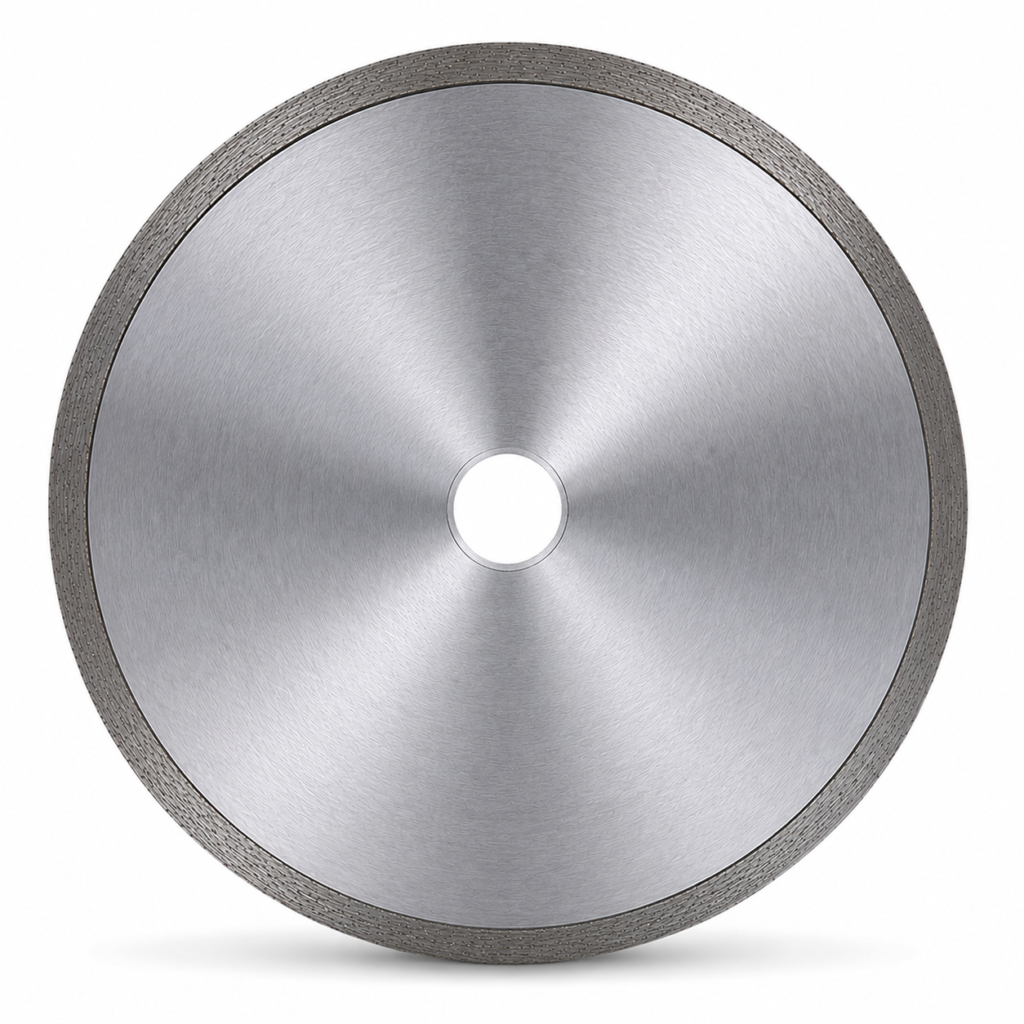
DOT Porcelain & Tile Blade
Continuous-rim diamond blade for chip-free porcelain & tile, 7–14″. Run wet for finished, crack-free edges.
Price range: $45.00 through $95.00
Porcelain and Tile Diamond Blades
Porcelain is the hardest material most contractors cut, and tile is the least forgiving. Everything about the cut ends up visible in the finished room, so edge quality decides the blade rather than speed. DOT Diamond Tools supplies continuous rim blades to tilers, stone fixers, bathroom and kitchen installers and commercial fit-out teams working in porcelain, ceramic and large-format panels.
Why the rim must be continuous
Porcelain chips on the exit face, not the entry face. Every gullet in a segmented or turbo rim is an interruption in the cutting edge, and each interruption is another opportunity to spall the glaze on the underside of the cut. An unbroken continuous rim keeps the edge in contact and the tile supported right through the pass. It cuts more slowly than a turbo rim and that is the point. Rim types are compared in segmented versus turbo versus continuous.
Soft bond on hard material
Through-body porcelain is dense and extremely hard, which means it takes a soft bond. The matrix has to erode fast enough that blunted diamonds release and sharp ones take their place; a hard bond simply polishes over and the operator ends up pushing rather than cutting. It is the same rule that governs granite, and the opposite of what block and asphalt need. See our bond guide.
Wet cutting is not optional
A continuous rim has no gullets to carry heat away, so water is doing structural work rather than just controlling dust. Run one dry and it will overheat within a few feet, warp the core out of true and burn a brown line along the cut. Every blade in the Porcelain and Tile range is wet-only, and a tile saw with a tray or pump feed is the right machine. Dust control is a secondary benefit rather than the reason.
Technique matters more than the blade
Feed slowly and let the blade set its own rate. Most chipping happens in the last quarter inch, where the unsupported edge breaks away as the blade exits, so ease off at the end of the pass or score and finish rather than pushing through. Support the tile fully on the bed. On large-format porcelain the length of the bed and the trueness of the rail matter more than horsepower, and a fresh rim matters more than either.
Sizes and machines
Seven to fourteen inches covers tile work. Smaller blades suit compact site saws and cutting in situ; larger blades give the depth and the straighter line needed for large-format panels and worktops. Match the blade to the saw arbor and check the maximum blade diameter the machine accepts before ordering. Machines are in tile saws, including dust-controlled options for occupied buildings.
Where stone differs from porcelain
Marble, travertine and limestone are softer and more layered than porcelain, and they flake at the arris rather than chipping at the glaze. They still want a continuous rim and a soft bond, but they are more tolerant of feed rate. Granite is harder again and moves to a segmented premium blade on a bridge saw. The full range is under stone, marble and granite.
Frequently Asked Questions
What blade cuts porcelain without chipping?
A continuous rim blade run wet. Segmented and turbo rims have gullets that interrupt the cutting edge, and each interruption risks spalling the glaze on the exit face. The unbroken rim supports the tile through the whole pass.
Why does porcelain chip at the end of the cut?
Because the material is unsupported as the blade exits. Slow the feed rate in the last quarter inch, or score and finish rather than pushing straight through. Full support under the tile on the saw bed also helps.
Can I cut porcelain dry?
No. A continuous rim has no gullets to shed heat, so a dry pass will overheat the blade within a few feet, warp the steel core and burn the glaze along the cut. Water is cooling the blade, not just suppressing dust.
What bond does porcelain need?
A soft bond. Porcelain is extremely hard, and hard material needs a matrix that erodes quickly enough to keep exposing sharp diamond. A hard bond glazes over and stops cutting.
What size tile blade should I buy?
Match it to your saw. Seven to ten inch blades suit compact site saws and in-situ work; twelve and fourteen inch blades give the depth and straighter line needed for large-format porcelain and worktops. Check the machine’s maximum blade diameter first.
Can the same blade cut porcelain and natural stone?
Largely yes. Both want a continuous rim and a soft bond, and marble and travertine are more forgiving on feed rate than porcelain. Granite is the exception and performs better on a segmented premium blade.
Why has my tile blade stopped cutting cleanly?
Usually a glazed rim from running too fast or with insufficient water, or a rim worn out of round. Check the water first, then feed rate. A blade that has overheated and cupped cannot be recovered.
Call our team on (701) 922-1526 and we will match a rim and bond to the material you are cutting.