
Description
Porcelain chips on the exit face, not the entry face. That single fact rules out a segmented or turbo rim for finished tile however fast it cuts: every gullet is an interruption in the cutting edge, and every interruption is another chance to spall the glaze on the underside of the cut.
Continuous rim, and wet is not optional
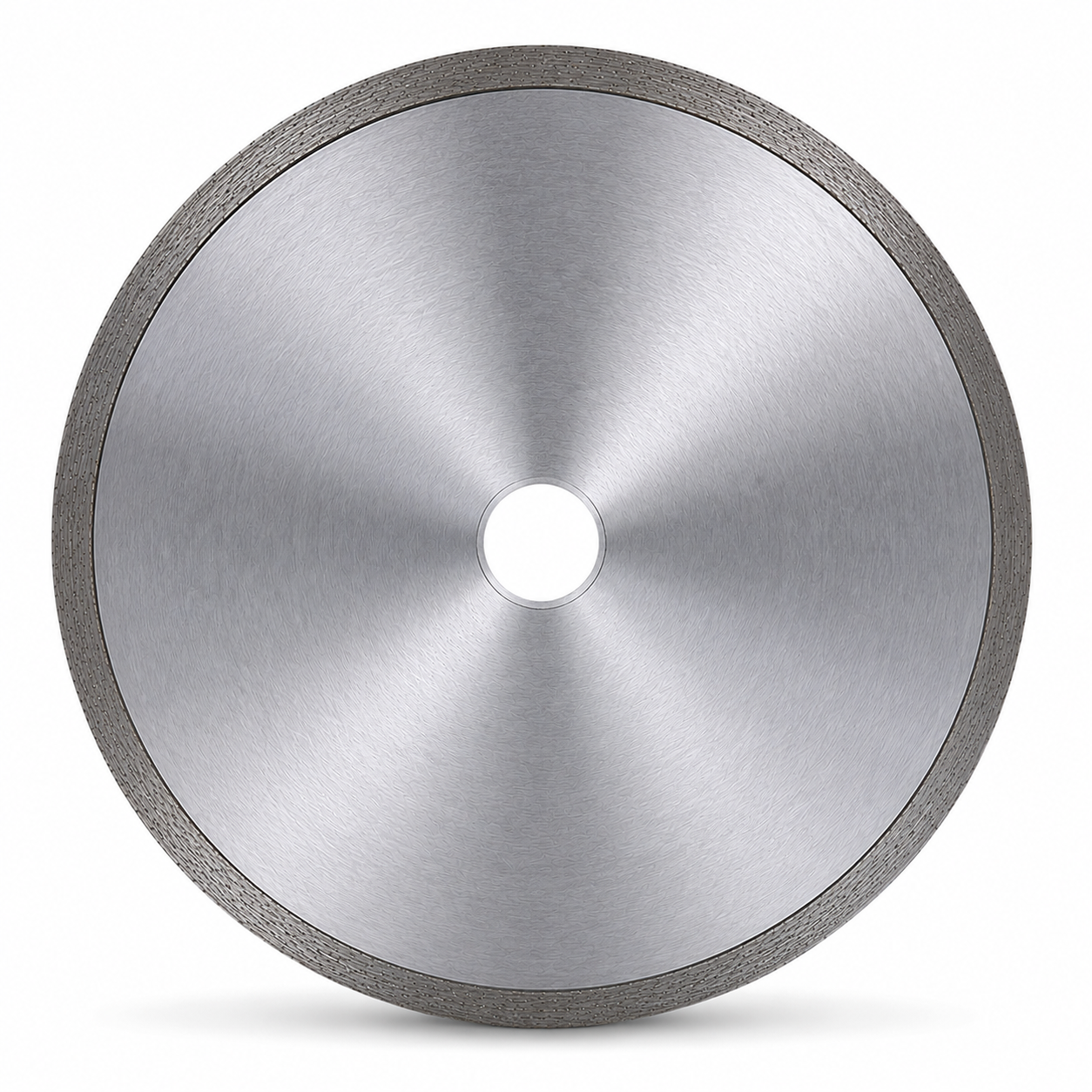
This blade runs an unbroken continuous rim, so the edge stays in contact and the tile is supported right through the pass. It is wet only. With no gullets to carry heat away, a continuous rim run dry will overheat within a few feet, warp the core out of true and burn a brown line along the cut. Water is doing real work here, not just controlling dust.
Sizes and saws
Five diameters, 7″ to 14″, sized for tile saws with a tray or pump feed. The soft bond is matched to the extreme hardness of through-body porcelain: hard material takes a soft bond, so the matrix erodes fast enough to keep fresh diamond at the surface.
Feed slowly and let the blade set its own rate. On large-format porcelain, score the last quarter inch rather than pushing through the end of the cut — that is where almost all chipping happens. See the tile and porcelain range and matching tile saws.