
Showing all 2 results
-

DOT Large-Diameter Wet Core Bit
Rig-mounted wet core bit, 16″–24″, for storm drainage, culvert and sleeve penetrations in reinforced concrete.
Price range: $525.00 through $765.00 -
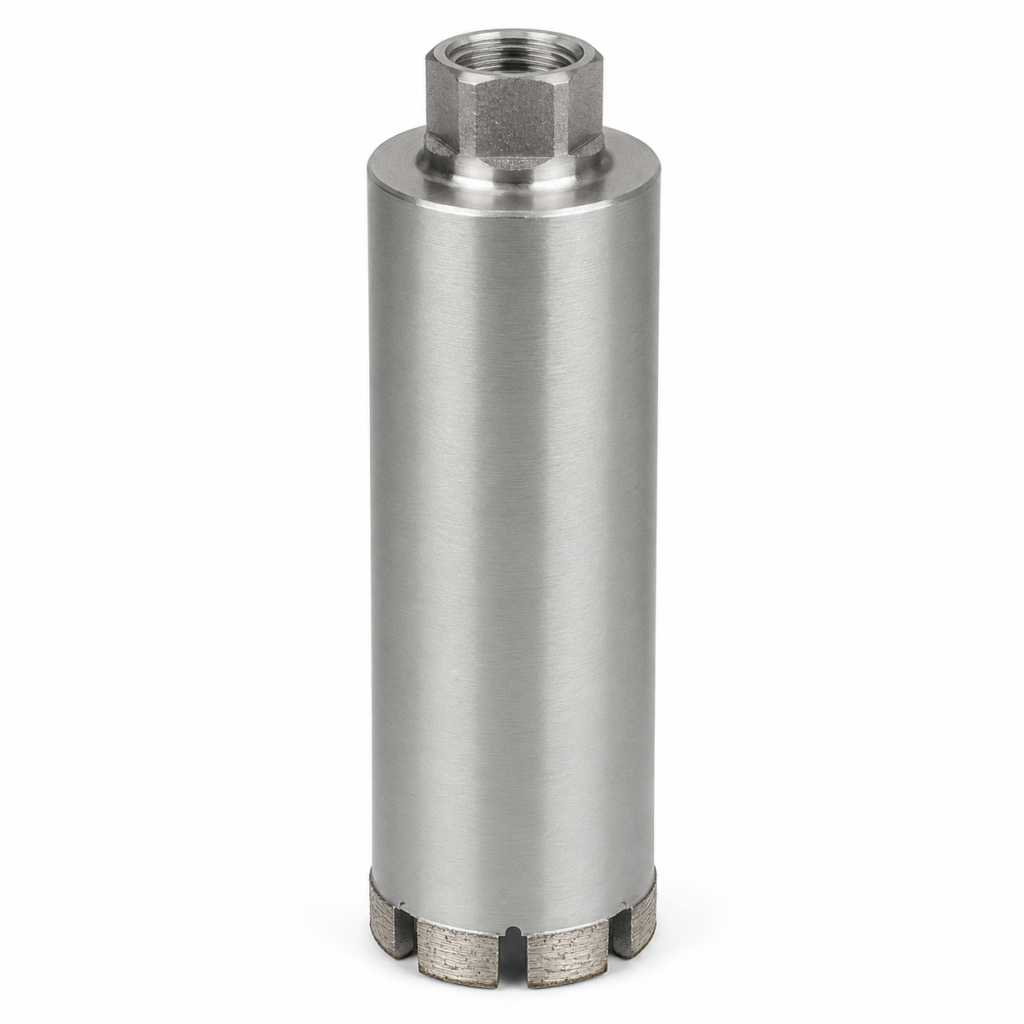
DOT Wet Core Bit
Laser-welded wet diamond core bit for cured & reinforced concrete, 1–14″, 1-1/4″-7 thread. Rig-mounted, cut wet.
Price range: $75.00 through $465.00
Wet Diamond Core Bits for Concrete
Wet core bits are the tool for structural concrete. Running on a rig with water fed through the barrel, they drill clean, accurate holes through cured slabs, walls and rebar-reinforced concrete at sizes from 1″ up to 14″. If the material is hard, dense or reinforced, this is the family you want — dry bits belong in block and masonry.
Why Wet Drilling Wins in Concrete
Water does three jobs simultaneously, and all three are why wet bits outlast dry ones by a wide margin in hard material. It cools the segments, which stops the diamonds polishing flat and the bond overheating. It flushes slurry up and out of the annulus, so the bit is cutting fresh material rather than grinding its own debris. And it suppresses silica dust at source, which is the recognized engineering control for coring under OSHA Table 1. Take the water away and a wet bit will glaze within minutes.
The 1-1/4″-7 Thread
Wet core bits use a 1-1/4″-7 thread as standard, which is the fitting on core rigs and wet core drills. Dry bits use 5/8″-11 and are not directly interchangeable, though a thread adapter lets one machine run both. Check what your drill takes before ordering, because the thread follows the machine rather than the hole.
Rig Setup and Feed Pressure
Anything above roughly 4″ in structural concrete belongs on an anchored stand. The stand keeps the barrel square to the surface and lets you apply steady, even feed — and steady feed is the single biggest factor in bit life after water supply. Too little pressure polishes the diamonds without cutting; too much overheats the bond and risks segment loss. The bit should be producing a continuous ribbon of thin gray slurry. If the slurry turns pasty or you see steam, increase the water before you do anything else.
Drilling Reinforced Slabs
Rebar is the moment most bits are damaged. When the sound changes and the bit loads up, ease the feed rather than leaning in, and confirm water is still flowing — steel work-hardens and heats far faster than aggregate. Move through the bar slowly and return to normal feed once clear. For slabs with heavy reinforcement, use a bit specifically rated for reinforced concrete, where the bond is formulated to keep releasing diamond when it meets steel rather than glazing against it.
Bit Life and What Shortens It
A laser-welded wet bit run with proper water and steady feed will drill hundreds of holes in ordinary concrete. Three things cut that short. Insufficient water glazes the segments and is by far the most common cause. Forced feed through rebar strips segments off the barrel. Off-axis drilling binds the barrel in the hole and can distort it permanently. All three are technique rather than product faults, which is why two crews using identical bits often report very different life.
Frequently Asked Questions
When should I use a wet core bit instead of a dry one?
Whenever you are drilling hard, cured or rebar-reinforced concrete. Wet bits last far longer in structural material and control silica dust at source. Dry bits are for block, brick and soft masonry, or where water genuinely cannot be used.
What thread do wet core bits use?
1-1/4″-7, the standard fitting on core rigs and wet core drills. An adapter lets a 5/8″-11 machine run them, but check your drill before ordering.
Can I run a wet core bit without water?
No. It will glaze and overheat within minutes and the segments can come off the barrel. If water is not available, use a dry bit with dust extraction instead.
How much water does a wet bit need?
Enough that the slurry runs out thin and gray rather than thick or steaming. A steady flow matters more than sheer volume — intermittent water is harder on a bit than a consistent moderate feed.
What size wet core bits are available?
From 1″ up to 14″. Size the bit to the fitting passing through the hole plus clearance, not to the nominal pipe size, or the fitting will not go through.
Do I need a rig or can I drill handheld?
Above about 4″ in structural concrete you need an anchored stand. A stand feeds the bit straight and stops the barrel binding, which is both a quality and a safety issue.
Why has my wet core bit stopped cutting?
Almost always glazing from too little water or too much speed. Drill into an abrasive dressing block to expose fresh diamond, then correct the water flow and ease the feed before continuing.
Coring a reinforced slab? Tell us the diameter, the thickness and the drill you are running — call our team at (701) 922-1526.