
Showing the single result
-
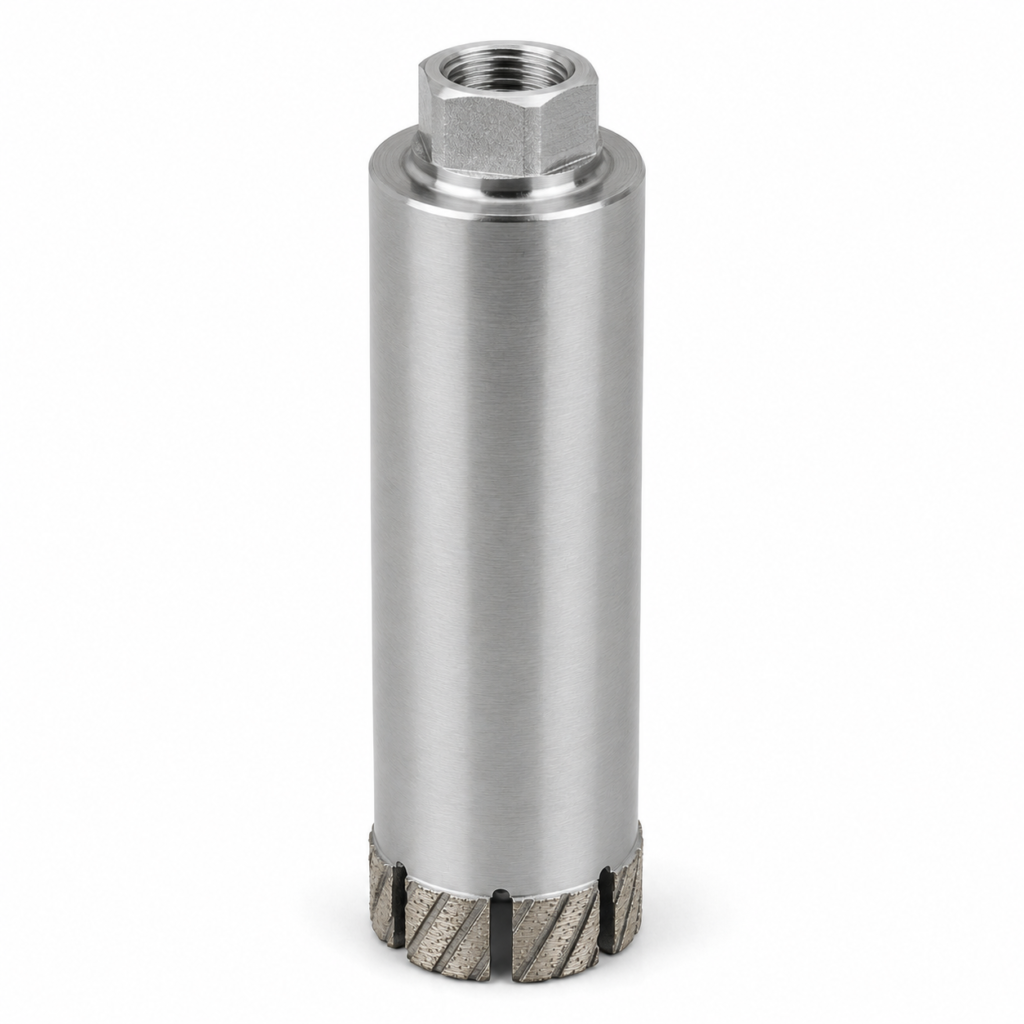
DOT Dry Core Bit
Dry diamond core bit for block, brick & masonry, 1–6″, 5/8″-11 thread. Fits handheld drills for fast holes.
Price range: $60.00 through $185.00
Dry Diamond Core Bits for Block and Masonry
Dry core bits run on a handheld drill with no water supply, which makes them the practical choice for block, brick and soft masonry — and for any job where slurry would cause more problems than dust. They use a 5/8″-11 thread, come with turbo segments for fast cutting without coolant, and cover the sizes most commonly needed for conduit, vents and small penetrations.
Where Dry Bits Are the Right Tool
Dry bits earn their place in soft, abrasive material: concrete block, CMU, brick, and lightweight masonry. These materials are much less punishing on diamonds than cured structural concrete, so the bit survives without coolant. They are also the answer in occupied buildings, on upper floors, and in finished interiors where running water and slurry down a wall is unacceptable — a dry bit paired with a dust extractor keeps the work clean. What they are not is a substitute for a wet bit in reinforced structural concrete, where they will overheat quickly.
Clearing Dust and Managing Heat
Without water, dust is the enemy. Packed dust inside the barrel insulates the segments, drives temperature up and glazes the diamonds fast. Back the bit out every few inches to clear the annulus and let air move through it, and do not run continuously for long stretches — brief pauses with the bit spinning free shed a surprising amount of heat. Connect a dust extractor where the machine allows it. This both protects the bit and handles the silica exposure, since dry masonry drilling generates a substantial dust load and needs a control under OSHA Table 1.
The 5/8″-11 Thread
Dry core bits use a 5/8″-11 thread, matching handheld drills and angle-grinder-style machines. Wet bits and rigs use 1-1/4″-7. The two are not directly interchangeable, but a thread adapter crosses between them so one machine can run both families. Decide which drill you own before buying bits — the thread follows the machine.
Starting the Hole Cleanly
A dry bit on a handheld drill will wander at start-up unless it is controlled, and a hole that starts off-center rarely recovers. A pilot bit or centering guide locates the bit precisely and holds it while the rim bites. The alternative is to start at a shallow angle to score a ring, then bring the drill upright once the bit has a groove to follow. Either way, get the first quarter-inch right and the rest of the hole follows.
Frequently Asked Questions
What are dry core bits used for?
Drilling block, brick and soft masonry with a handheld drill and no water. They suit occupied buildings, upper floors and finished interiors where slurry is unacceptable, and they pair well with a dust extractor.
Can I use a dry core bit in structural concrete?
It is not recommended. Cured and reinforced concrete generates far more heat than a dry bit can shed, so it will glaze and wear quickly. Use a wet bit on a rig for structural work.
What thread do dry core bits use?
5/8″-11, matching handheld drills. Wet bits and rigs use 1-1/4″-7, and an adapter lets one machine run both types.
Why does my dry bit overheat?
Usually packed dust in the barrel, or drilling continuously without a break. Back the bit out every few inches to clear the annulus, pause to let it cool, and connect an extractor where possible.
How do I stop the bit wandering when starting?
Use a pilot bit or centering guide, which locates the bit and holds it until the rim bites. Failing that, start at a shallow angle to score a ring, then bring the drill upright.
Do I need dust extraction for dry core drilling?
For masonry and concrete, yes. Dry drilling produces significant respirable silica, and a shroud or extractor connected to a HEPA vacuum is the recognized control under OSHA Table 1.
What sizes do dry core bits come in?
Commonly 1″ through 6″, which covers conduit, vents and small penetrations. Larger diameters in hard material need a wet bit on a rig for the torque and cooling.
Drilling block or brick? Tell us the diameter and the drill you are running — call our team at (701) 922-1526.