
Showing all 2 results
-
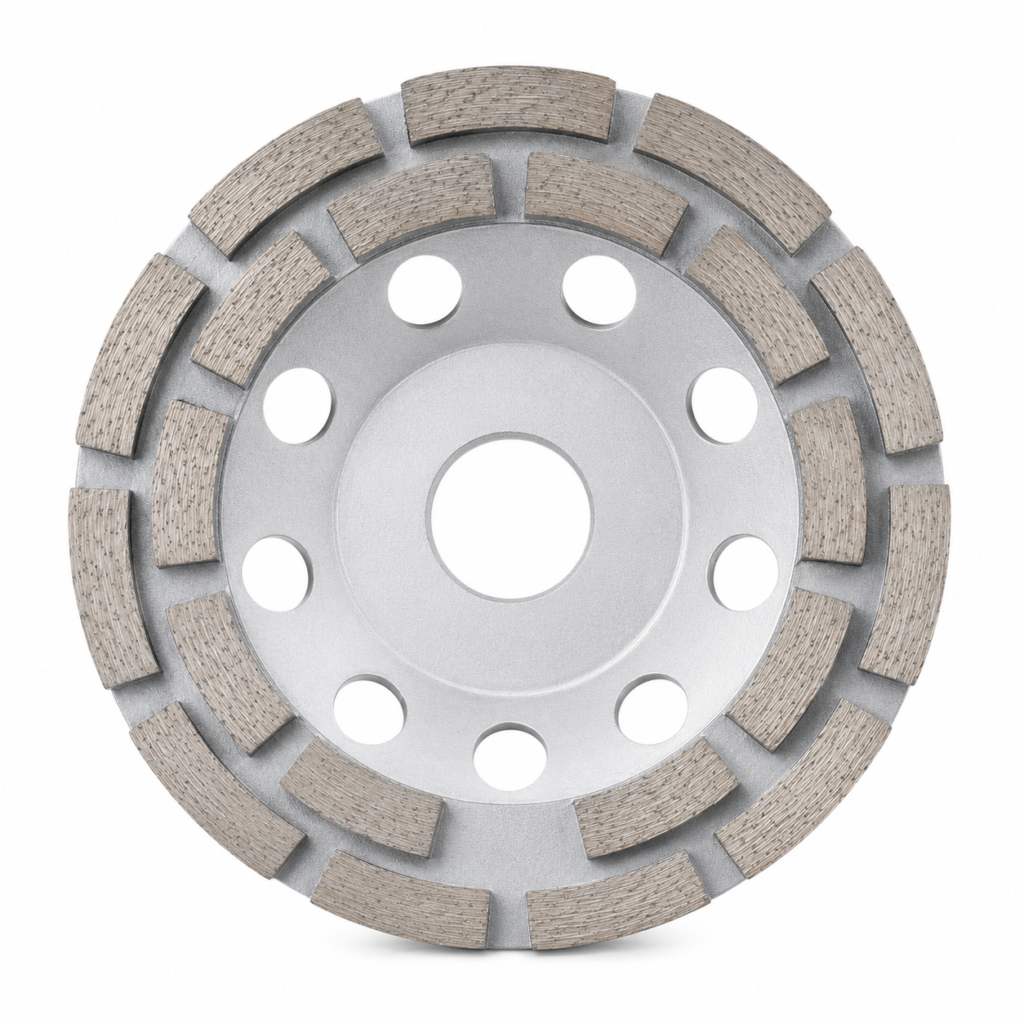
DOT Double Row Cup Wheel
Aggressive double-row diamond cup wheel for fast coating & concrete removal, 4–7″.
Price range: $45.00 through $79.00 -
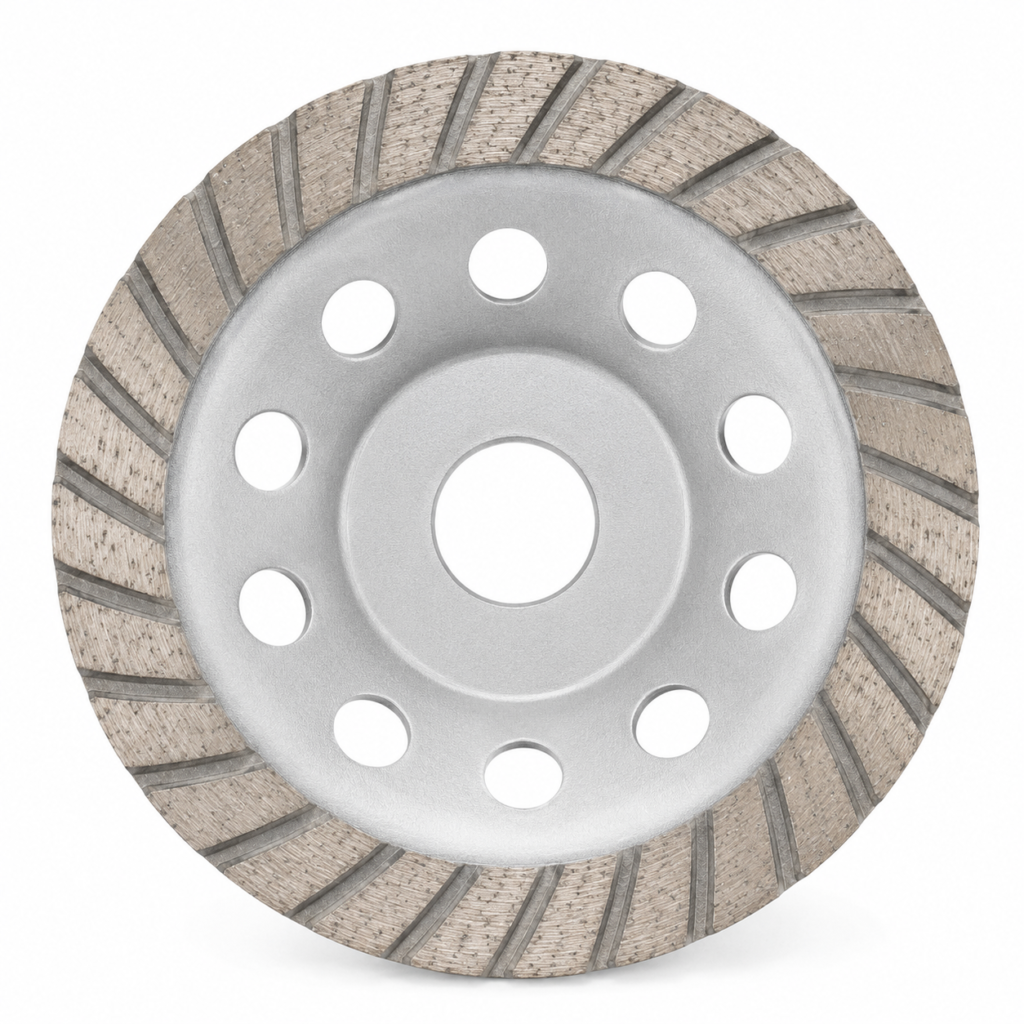
DOT Turbo Cup Wheel
Turbo diamond cup wheel for grinding concrete & masonry, 4–7″. Coating removal and surface prep.
Price range: $45.00 through $79.00
Diamond Cup Wheels for Concrete Grinding
A diamond cup wheel mounts on an angle grinder and removes material across a flat face rather than through a kerf. It is the tool for levelling high spots, taking down trowel marks and form lines, stripping paint, epoxy and mastic, and preparing a slab before a coating goes down. DOT stocks double-row wheels for aggressive removal and turbo wheels for smoother finishing, in 4″ through 7″.
Double Row or Turbo
The segment layout on the face decides how the wheel behaves, and picking the wrong one wastes a lot of time. Double-row cup wheels carry two concentric rings of segments and remove material fast — this is what you want for levelling, heavy coating removal and anything where speed matters more than the surface left behind. Turbo cup wheels use a continuous, waved rim; they take less per pass but leave a far smoother surface, which suits final grinding, feathering into an existing floor and preparing a slab for a thin coating. Crews doing full surface prep usually run both: double-row first, turbo second.
Sizing the Wheel to the Grinder
Cup wheels are sized to the machine, not the job. A 4″ or 4.5″ wheel suits a standard angle grinder running around 11,000 RPM and reaches into corners and along walls. A 5″ wheel is the general-purpose choice for most crews. A 7″ wheel covers open floor quickly but needs a large grinder with the torque to drive it and a guard sized to match — fitted to an underpowered machine it will bog and glaze. Most cup wheels use a 5/8″-11 thread that screws directly onto the spindle. Always check the maximum RPM stamped on the wheel against the grinder’s rated speed before mounting; overspeeding a cup wheel is genuinely dangerous.
Bond, Glazing and Technique
The same counterintuitive rule that governs blades applies here: hard, dense concrete wants a softer bond so the matrix keeps releasing fresh diamond, while soft, green concrete and abrasive block want a harder bond that resists being scoured away. When a wheel stops cutting and starts sliding across the surface, it has glazed — dress it on an abrasive block to re-expose diamond and check the bond suits the material. Technique matters as much as product: let the weight of the machine do the work, keep the wheel moving in overlapping passes rather than dwelling in one spot, and never lean on it. Pressure makes heat, and heat is what strips segments.
Dust Control
Dry grinding concrete generates respirable crystalline silica in large quantities — more than most cutting operations, because you are abrading a broad surface rather than opening a narrow kerf. A dust shroud connected to a HEPA vacuum is the standard engineering control and is what brings handheld grinding inside OSHA Table 1. Match the shroud to the wheel diameter, keep the brush skirt intact, and empty the vacuum before suction drops off.
Frequently Asked Questions
What is a diamond cup wheel used for?
Grinding and levelling concrete and masonry, removing coatings such as paint, epoxy and mastic, taking down trowel marks and form lines, and preparing slabs before a coating is applied.
Double row or turbo cup wheel, which should I buy?
Double row for fast, aggressive removal and coating stripping. Turbo for a smoother finish and final passes. Crews doing full surface prep typically use double row first, then turbo.
What size cup wheel fits my angle grinder?
4″ to 4.5″ for a standard angle grinder, 5″ for general-purpose work, 7″ only on a large grinder with the torque and guard for it. Check the wheel’s maximum RPM against the grinder’s rated speed.
Why has my cup wheel stopped cutting?
It has glazed — the diamonds are polished flat and the bond is too hard for the material, so nothing fresh is being exposed. Dress it on an abrasive block, ease off the pressure and confirm the bond suits the surface.
Do I need a dust shroud for grinding concrete?
For any dry grinding, yes. Concrete grinding produces high levels of respirable silica, and a shroud paired with a HEPA vacuum is the recognized control under OSHA Table 1.
Can a cup wheel be used wet?
Many can, which reduces heat and dust, but check the wheel is rated for it and never use water with an electric grinder that is not. Wet working is standard for stone and polishing.
What thread do cup wheels use?
Most use 5/8″-11 and thread directly onto the grinder spindle. Some use a plain bore with an arbor nut, so check what your machine takes before ordering.
Grinding or prepping a slab? Tell us the surface and the grinder you run — call our team at (701) 922-1526.