Industries We Supply
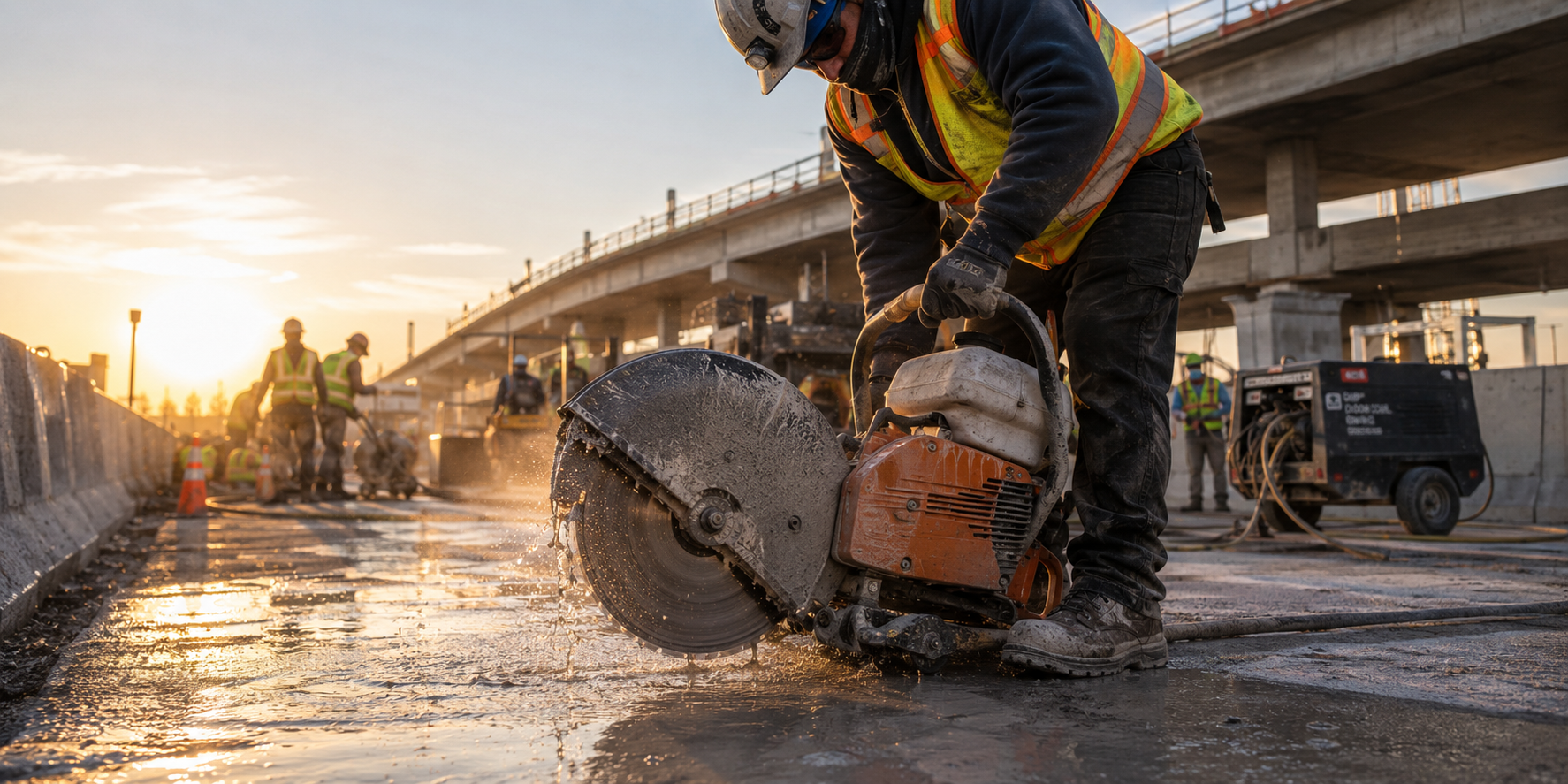
DOT Diamond Tools supplies diamond blades, core bits, grinding wheels and cutting equipment to six sectors of the construction industry. Each one puts a different demand on the tooling — and buys differently as a result.
Who we supply, and why it matters
A blade that performs on a highway resurfacing job will disappoint on a bridge deck, and the tooling a plant maintenance crew keeps on the shelf looks nothing like what a tile contractor carries. The material is different, the machines are different, and the way the work is scheduled changes what “the right blade” even means.
These pages set out what each sector actually cuts, which bond and rim suit it, what fails when the specification is wrong, and the kit we would put on the truck. With 35 years in diamond tooling behind the recommendations, they are written to answer the question a buyer is really asking: what should I be running on this job?
Choose your sector
What every sector gets wrong at least once
Bond hardness, backwards. Hard, dense, cured material takes a soft bond; soft, abrasive material takes a hard bond. It reads the wrong way round and it is the single most expensive mistake in the trade — see the bond guide.
Depth of cut. One pass should take no more than a third of the blade diameter. Choosing the cheaper, smaller blade is how a crew ends up making three passes where one would have done, which on a timed closure never pays.
Silica. Cutting and grinding concrete dry is one of the highest-exposure tasks on any site. Water at the blade or on-tool extraction is the practical route to compliance — see OSHA Table 1.
Supplying contractors for over 35 years
Blades, bits and equipment matched to the work — not a catalogue read back at you.
Talk to a Specialist